
FAQ
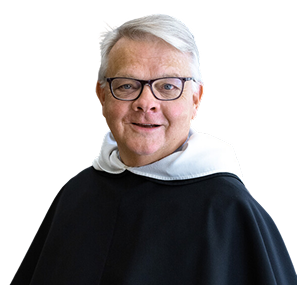
Describe this distinctive spiritual ministry
This is a 27-year-old ministry directly providing counsel to over 700 dream visitors (and hundreds more via phone or email), with new people seeking support every week. Dream visitors come from all faiths and walks of life, have died, and seek prayer and support. These individuals are in the interrupted death process. Instead of moving quickly toward heaven in Christian terms, these individuals are experiencing purgatory or the purification that occurs after death. According to the Catechism of the Catholic Church, purgatory purifies us from unhealthy attachments, giving us the chance for any healing that is needed. After receiving a dream, Father Nathan meets with a prayer partner to provide counsel to help the soul loosen whatever unhealthy attachment is holding them back to continue to move towards God’s fullest promise. Father Nathan writes books about his experiences and produces a podcast. All proceeds support Dominican ministries as he takes a vow of voluntary poverty.
Why this ministry?
This ministry chose Father Nathan. He is responding in the most loving way possible. As he states, “If someone has a problem with this, I pray for the consciousness that I can just be love, turn the other cheek, to bless them and to be kind to them.” Grief support is an important aspect of this ministry, which offers consolation and healing for those who have lost loved ones. Father Nathan states this about his ministerial approach: “1 Corinthians 13 is all about service for the community in love. We all have been given different gifts, coming from the giver. However, if we have the tongues of angels and can speak with them, if we could do miracles, but do it without love, it’s a noisy gong, a booming symbol. It’s a bunch of noise. The goal of ministry is to do it with love, with the giver more important than the gift.” “I try to think of God as love, and that the most important thing I can ever ask from God is more love. Help me receive love.”
What is Father Nathan’s background?
Father Nathan was born in Goves, Texas, and ordained as a Catholic Dominican priest in 1985. Raised in the Christian Catholic Tradition. He holds an MA and an MDIV degree from the Dominican School of Philosophy and Theology at the Graduate Theological Union in Berkeley, California. He has been in leadership roles in four different faith communities, and served in campus ministries at the University of California, Riverside, Arizona State University, and Stanford University, and is currently in residence at the University of Arizona. Father Nathan has chaired the Executive Board of the Catholic Campus Ministry Association (CCMA). His family line has multiple members who share this mystical gift.
Is Father Nathan a practicing priest? Does he have the permission of church superiors?
As a member of the Western Dominican Province and the Dominican religious order, Father Nathan has the permission of his superiors to do this work. In 2018 when Afterlife, Interrupted; Helping Stuck Souls Cross Over Book 1 came out, his provincial the Very Reverend Father Mark Padrez O.P., (Prior, Provincial Province of the Most Holy Name of Jesus. Oakland, California) contributed this supportive statement “Father Nathan has written from his deep experience of prayer, faithfulness to the Church, and dedication to his ministry as a priest. He has the profound desire to bring reconciliation and healing to those most in need.” – When Afterlife, Interrupted; Helping Stuck Souls Cross Over Book 2 came out in 2020, there was a new Superior, the Very Reverend Christopher Fadok, O.P., who also contributed a supportive statement writing “Pope Francis refers to the church as a field hospital to express his vision for the care of the wounded among us. The thing the church needs most today is the ability to heal wounds and to warm the hearts of the faithful; it needs nearness, proximity. I see the church as a field hospital after a battle. I know few priests as dedicated as Father Nathan to serving as a medic at the battlefront. His faith in God Who is Love, and in God’s promise of eternal life, leads Father Nathan undaunted to bring healing to those whose wounds menace them and their journey home.”
Is communicating with souls permitted by Church teaching?
Fr. Nathan helps the Soul/Spirit move toward God. He subjects everything to God’s will. He says protective prayers before and after every session to ask for God’s protection and guidance, the motive isn’t to gain information from Souls but to help them get unstuck. He doesn’t report the souls that he helps saying things that contradict the Catholic faith. When it comes to him and his Prayer Partners lending their voices to the souls this is something that the church hasn’t commented on directly, but it goes in the same category as lending his hand to a soul for automatic writing and the holy office’s reply indicated it was open to that being permissible in some circumstance. While a future magisterial decision could go the other way the idea of lending your voice to God or a saint or a soul in purgatory would seem to be permitted in at least some circumstances after all the biblical prophets lent their voices to God and angels. Mediums do something similar.
The Holy Office is a 1898 decision lending the ability to communicate to a soul could be legitimate in some circumstances. Father Nathan may well be among those circumstances. The religious superiors in the Dominican order have not condemned what he’s doing. The Catechism’s very cautious statement regarding contacting The Souls of The Departed. What Father Nathan is doing it does not look like it contradicts Church teaching.
The subject of speaking with the Departed is more complex than many people realize. The Old Testament contains strong prohibitions on necromancy but these look like ceremonial precepts to direct the Israelites away from Canaanite practices and the Old Testament itself. It contains later perfectly legitimate examples of contact with the debt like Judah Maccabee’s contact with Onias and Jeremiah the New Testament also doesn’t forbid contact with Spirits instead it advocates to test the spirit’s procedure when it comes to church teaching the church allows people to make requests of departed Spirits including requests for their prayers and seemingly even requests for them to send us messages like what is God’s will for my life or whether they’re okay in the afterlife.
Furthermore, the church acknowledges that it is legitimate to receive messages from Spirits as in the case of apparitions of saints and requests by souls in purgatory for help. It doesn’t prohibit scientific research on contact with spirits and the most recent most authoritative Church statement is phrased in the form of a reasonable warning as opposed to an absolute prohibition on contact with spirits when it comes to what Father Nathan is doing. It does not appear to be condemned by the church; he’s doing it with the consent of his superiors, and he seems to employ the principles we’ve discussed. For a start, he isn’t initiating contact with Spirits; he’s waiting until they manifest to him in dreams, he isn’t pumping them for information about the future or doing magic. He is seeking to help them move on in their Journeys to God. The Theologian they consulted it looks like this is an acceptable practice that is not contrary to church teaching
How is this different from necromancy?
A. Is it ok to communicate with loved ones who have died?
Jimmy continues: “In the New Testament, prophets initiate contact with prophetic spirits. Likewise, when we ask the saints for their intercession, or a sign that a deceased loved one is okay, this is also acceptable. While there are clear cautions to critically evaluate the results of contact or to critically test the spirits, initiating contact can be moral according to common theological options. It is God himself who makes the saints and holy souls aware of our requests for their intercessions. If it is possible to speak with the deceased, and if they can hear us and respond, then communication with them is moral as illustrated by Judah Maccabee’s communication with Anias and Jeremiah, or the interactions of living Christians with saints and holy souls in purgatory.
In the Quad Liberal questions proposed by Saint Thomas Aquinas, he considered an issue very similar to the morality of contacting departed souls. He considered whether it was moral to ask a dying person to reveal their fate after death, and he said it is not a sin to seek to fulfill a natural desire unless it is done with some additional disorder. Disordered behavior would include pursuing knowledge that prevents a person from fulfilling their obligations, people seeking to know things out of pride, or having presumptuous confidence in their own abilities, or testing God. These would be disordered, but there is no disorder in asking to know a dying person’s state. According to Aquinas, there is no problem in principle with asking a dying person to do something after death to let a person know they are ok or that they need prayers. Comparing this to Father Nathan’s ministry, the only difference is that Aquinas speaks of asking a person who is still alive to do this after death. It would not make a difference after death as long as it is framed in a Christian context and subject to God’s will.
B. What does the bible or the Catechism say about necromancy, and how does this relate to Father Nathan’s ministry? -Condemned Practices: According to Jimmy, Catholic theological tradition, with good reason, has sensitivity and delicacy to situations that could bring fraud, trickery, or the seeking of monetary compensation (for example, mediumship). According to the catechism, all forms of divination and magical practices should be rejected, including unveiling the future, contacting demons, or conjuring up the dead for information, instead of getting it from God. The bible calls this communication “alchemy, necromancy, and other magic practices.” The Catechism warns people about divination and magic in paragraph 2115: ‘God can reveal the future to prophets and saints, but we should not have an unhealthy curiosity about this. Instead confidently entrust ourselves to God’s care when it comes to the future. The Catechism is against divination that “conceals a desire for power over time history” and in the last analysis “power over other human beings as well as a wish to conciliate hidden powers.” The Old Testament has been the most influential on this subject as it relates to condemned practices of information seeking
In Deuteronomy 18:9-14 the Bible states: “When you come into the land the Lord your God is giving you, you shall notlearn to follow the abominable practices of those Canaanite nations. There shall not be found among you anyone whopasses his son or his daughter through the fire. Anyone who practices divination, or tells portions, or interprets omens, ormakes potions from herbs, or a spellbinder, or one who consults a non-human spirit that has knowledge, or who inquiresof the human dead… for whoever does these things is an abomination to the Lord and because of these abominations the Lord your God is driving them out before you. You shall be blameless before the Lord your God; for these nations which you are about to dispossess, listen to fortune-tellers, and to those who practice divination. As for you, the law ofGod has not allowed you to do this. (Translation is by the Evangelical scholar Michael Heiser) The Israelites were not to inquire of human or non-human spirits for their supernatural information or to perform other Canaanite practices. Instead they were to listen to the prophets that the Lord would send them. This makes it clear, thatwhat is under discussion (and condemned) is obtaining information from supernatural sources.
Father Nathan’s ministry:
-Invites the communion of saints for their intercessions and to be prayer partners-makes a prayer request to God-In “Afterlife, Interrupted Book 1: Helping Stuck Souls Cross Over,” Father Nathan writes, “This is not a book on how to contact the dead. It’s not to be understood as an encouragement to seek out conversations with the dead. Necromancy is the practice of calling forth someone from the dead to declare future events or to reveal hidden facts for the benefit of theone doing the calling forth. That is not at all what I do. You will not find that here.”
-Father Nathan’s ministry is giving the soul counsel and information to help them, just as we give information to saints whenwe let them know of our prayer request.
-Father Nathan and the prayer partner end the session with the Glory Be to give praise that belongs to God, not the ego.
What about the danger of a deceptive Spirit or demon is present?
Father Nathan begins every prayer session by armoring himself in the name of the Father, the Son, and the Holy Spirit and takes precautions so that that which is holy reigns. The Catholic church faced this issue in the first century and devised a solution. Saint Paul told the Corinthians, “When you were a heathen, you were led astray to mute idols. You may have been moved. Therefore, I want youto understand that no one speaking by the spirit of God ever says Jesus be cursed and no one can say Jesus is Lord exceptby the Holy Spirit.” Paul warns the Corinthians not to believe every spirit and he gives them a test to distinguish between Spirits. If the spirit says Jesus be cursed, or literally Jesus anathema in Greek, it is definitely not the Holy Spirit.
If the spirit says Jesus is Lord, that is a sign it may be the Holy Spirit, or an angel, or other Spirit that’s working for the Holy Spirit. Paul also indicates that humans have a role in making or breaking contact with spirits. When discussing the role of prophets in worship services, he says, “Let two or three prophets speak, and let the others weigh what is said. If a revelation is made to another, let the first be silent, for you can all prophesy one by one, so that all may learn and all be encouraged. The spirits of prophets are subject to prophets for God, who is not a God of confusion, but of peace.”
Prophets can initiate prophetic discourse in worship service, making contact with heavenly spirits, whether they’re contacting the Holy Spirit or an angel. Prophets should then assess and test one another, because God wants things done in an orderly, peaceful way. While people could make a mistake in thinking a deceptive spirit was actually telling the truth, as the first Christians and inspired authors of the New Testament wrote, the danger of making a mistake is not so high that all contact with spirits must be avoided. Inspired Bible authors expected readers to have contact with spirits and gave them useful tests for how to spot the deceivers.
Does the fact that this is not an established part of the Catholic tradition give any reason for concern?
Elements of this practice have precedence in existing Church experiences. There are many historical accounts of helping souls in purgatory. It’s quite possible God might pick certain people to help souls on a regular basis, giving them a type of charism or gift. Father Nathan sees this gift as a gift of prophecy. The Congregation for the Doctrine of the Faith in Rome issued a document called Luvenescit Ecclesia[i] which speaks more about charismatic gifts and their diversity, including exceptional gifts of healing, of mighty deeds, a variety of tongues, gifts of teaching or of service. None of these lists claims to be exhaustive, and the Holy Spirit can even give new gifts over time that did notoriginally appear.
What about judgement?
According to Father Nathan, “Concerning judgment in the Christian tradition that Jesus will judge you, or God will judge you, or somebody will judge you, I try to slow it down. What happens? A judge presides over a courtroom. What’s the most important thing that happens in the courtroom? To find the truth. What’s the truth? And that accords well with what I’ve heard of the afterlife review, that the person is brought to a deeper truth about themselves, and the truth will set you free, and that it’s beneficial and good for them. If Jesus is that judge, Yay! …and courtrooms need to be orderly. Maybe there does need to be somebody who can say, order, pay attention. But I think in the Christian imagination, people skip to the sentencing phase. Not the discovery and the truth. We want somebody to lower the boom, and we skip to the sentencingphase that Jesus is going to come and knock heads when he did absolutely the opposite, even when he had theopportunity. What did he say to those people who said they didn’t even know him when he did show up, back from thedead? What’s the first thing out of his mouth? It was NOT I’ll get you now, nor where the hell were you when I needed you? He didn’t do any of that. He just said, peace be with you. Let’s start over. And I believe that’s the Jesus, the judge.”
Are the people you help in purgatory?
According to Father Nathan, “Concerning judgment in the Christian tradition that Jesus will judge you, or God will judge you, or somebody will judge you, I try to slow it down. What happens? A judge presides over a courtroom. What’s the mostimportant thing that happens in the courtroom? To find the truth. What’s the truth? And that accords well with what I’ve heard of the afterlife review, that the person is brought to a deeper truth about themselves, and the truth will set you free, and that it’s beneficial and good for them. If Jesus is that judge, Yay! …and courtrooms need to be orderly. Maybe there does need to be somebody who can say, order, pay attention. But I think in the Christian imagination, people skip to the sentencing phase. Not the discovery and the truth. We want somebody to lower the boom, and we skip to the sentencingphase that Jesus is going to come and knock heads when he did absolutely the opposite, even when he had theopportunity. What did he say to those people who said they didn’t even know him when he did show up, back from the dead? What’s the first thing out of his mouth? It was NOT I’ll get you now, nor where the hell were you when I needed you ? He didn’t do any of that. He just said, peace be with you. Let’s start over. And I believe that’s the Jesus, the judge.”
How do angels interface in this work?
Angels often assist the process by guarding the process to ensure holiness. They provide their names as a linguistic token for us to understand. They also provide information about those they guard. They never leave anyone alone. They help the person they guard process and proceed after they die, and have been with their assigned person(s) while living. Each one of us has a guardian angel (or two) who watches over us always.
What about verifying that these people really existed and died in the ways depicted? How can this be proved true?
All dreams are recorded and transcribed to intentionally build a data set that can be studied. Future studies are in the works to verify these instances, which continue to come at an average of once a week over the last 27 years.
How can spiritual and religious people of different faiths and ideologies understand this?
-Father Nathan is a proponent of unitive thinking that reaches across different faiths and ideologies. Catholic means universal. The Second Vatican Council produced a document called the Nostra Aetate (link in endnotes) or Declaration on the Relation of the Church to Non-Christian Religions. This document demonstrates how God’s love and grace embrace all persons and how each person is created in the divine image without exception.
– The Catholic church is full of mysticism with saints, priests, and everyday people doing miracles. – Diverse faith communities help with accountability and continuing tradition, which does not need to be divorced from being open-minded.
– Father Nathan: “Religion is from the word relegare, which also means a ligament. The way a ligament works in the body is through many thin little strands of muscle, none of which could be used if it weren’t for the ligament wrapping around them and making them strong. It’s also the root of rely. If a religious group is really operating well, you can rely upon them, and they can rely upon you.
-My Dominican Order was formed in 1216 before the Reformation, to try to reform the church from within, and we’re still working at it. (As an analogy) Even hermit crabs might have a shell that seems like they are dead, but they crawl in it and find new ways to help it work. That’s what I want to do for the rest of my life while I’m here. Yes, you see some of the disintegration of religious structures and churches being turned into bars, offices or somebody’s dream home. But the spirit is not going away. It can reshape. It finds its way.”
– Father Nathan: “I think it’s possible to be in a church if it’s not toxic but still have quirks and foibles and things with which you disagree. A church can still be a home that’s productive and profitable for people. And it might be that the reason you need to be there is because that church needs you. It needs what you can bring. Everyone keeps doing the thing they do, and they keep blessing each other.”
What can listeners take away from this work?
This ministry provides insights to loosen whatever is blocking us so that we can further progress – however imperfectly – to live more fully in joyful hope and love. The grief support offers consolation to individuals to progress as their healing allows.
FAQ about exorcism?
If Fr. Nathan were to conclude that he is talking to a deceptive spirit, in ordinary circumstances, he would shut down communication and stop relying on anything that is said.
*This FAQ – along with other writings – incorporates a condensed version of Jimmy Akin’s interview and research. See the full interview at: https://www.youtube.com/watch? v=e8w_lwy0BkQ.
Jimmy Akin is an internationally known author and speaker. He is the senior apologist at Catholic Answers and has over thirty years of experience defending and explaining the Faith. Jimmy has an extensive background in the Bible, theology, the Church Fathers, philosophy, canon law, liturgy, and parapsychology. He is a regular guest on “Catholic Answers Live” and hosts Jimmy Akin’s Mysterious World podcast. His personal website is JimmyAkin.com
End Notes: https://mysterious.fm/270
Father Nathan Castle O.P.’s books
Afterlife Interrupted Book 1: Helping Stuck Souls Cross Over: https://amzn.to/3DDwkBV
• Fr. Nathan Castle’s book Afterlife Interrupted (vol. 2): https://amzn.to/43TWBXA
• St. Thomas Aquinas’s book Quodlibetal Questions: https://amzn.to/3rUoBNs –
Vatican documents: Nostra Aetate https://www.vatican.va/archive/hist_councils/ii_vatican_council/documents/vat-ii_decl_19651028_nostra-aetate_en.html – Xavier University Video on living out Nostra Aetate in a university setting, which could be extrapolated to living out Nostra Aetate in life: https://youtu.be/GaM5RQtw3cI? si=T7UZJb0s8Lu3xdxz see CDF document Luvenescit Ecclesia in end notes). https://www.vatican.va/roman_curia/co…).
• Fr. Herbert Thurston’s book The Church and Spiritualism: https://amzn.to/3KkB7fh
• Michael Heiser’s ebook The Old Testament Response to Pagan Divination: https://amzn.to/3OglQ0p
• CDF document Iuvenescit Ecclesia: https://www.vatican.va/roman_curia/co…
• 1912 Catholic Encyclopedia article on Spiritism: https://www.newadvent.org/cathen/1422..